

Emergency AC Service in Indian Harbour Beach: How Coastal Salt Air Causes Sudden System Failures

When your cooling quits after midnight on the Barrier Island, it is often more than bad luck. In Indian Harbour Beach, salt-spray and heavy humidity combine to attack your air conditioner’s electrical parts, which can trigger a fast, unexpected shutdown. If you need help right now, our team at Wallace Air Conditioning & Heating Inc. can dispatch an on-call technician for emergency AC service across Indian Harbour Beach and nearby coastal neighborhoods.
This guide explains why salt air hits contactors and capacitors so hard, what safe checks you can make before you call, and how coastal humidity shortens part life compared to inland Brevard communities.
Why Salt Air Triggers Sudden Night Failures on the Barrier Island
After sunset, temperatures drop and humidity rises. Moist, salty air moves in from the Atlantic and the Banana River. That moisture settles on outdoor equipment and inside electrical compartments if any gaps or worn gaskets let it in. The thin salt film becomes damp and conductive. When your system tries to start, that thin film can bridge tiny gaps, spike resistance where it should be low, and push already stressed parts over the edge.
Homes near the Eau Gallie Causeway and along the river canals feel this effect the most, but any street in Indian Harbour Beach can see it during sticky summer nights. The result is a system that worked at dinner and suddenly refuses to cool at midnight.
The Physics at Midnight: Dew, Conductivity, and Inrush Current
Think of salt like a sponge for water. It attracts moisture from the air. On metal, that wet salt acts like an electrolyte. **Salt‑laden moisture is conductive**, so it lets tiny currents wander where they should not. At the same time, your compressor demands a big burst of power to start. If a film of moisture and salt has created weak spots on a contactor or at a capacitor terminal, that inrush can cause arcing, overheating, or an instant short.
What Salt Does to Contactors and Capacitors
The two parts that fail most from coastal exposure are the contactor and the run or start capacitor. They sit at the heart of the outdoor condenser. When they fail, cooling stops even if the indoor fan keeps blowing warm air.
Salt‑Crusted Contactors: Pitting, Sticking, and Arcing
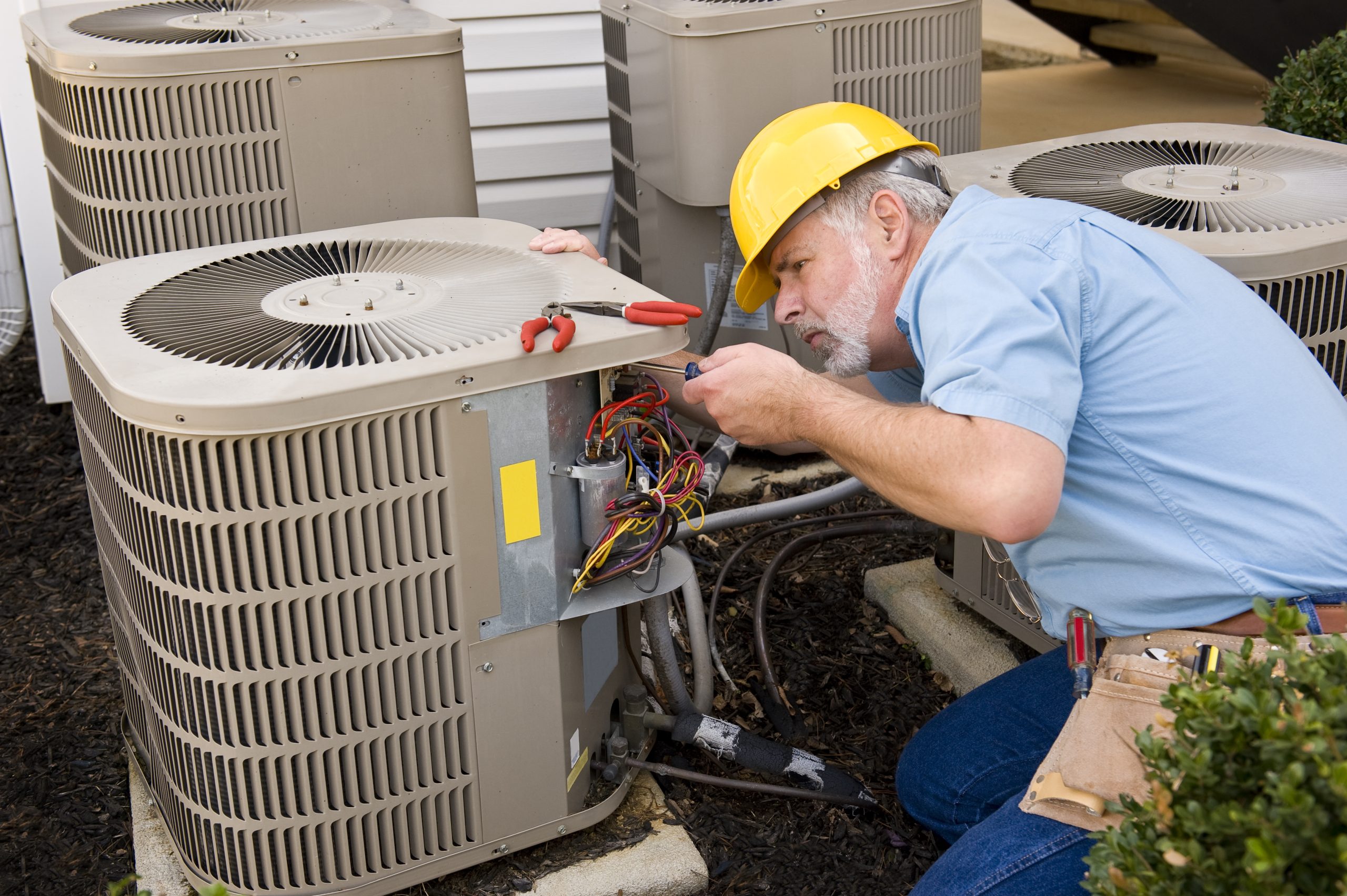
A contactor is an electrical switch that feeds power to your compressor and fan motor. Salt spray and humid air leave a gritty film on the metal contacts. Over time, the contact surfaces pit and oxidize. The coil has to work harder to pull the contacts tight, which can make the switch chatter. That chatter causes arcing, heat, and more pitting. In some cases the contacts stick closed, so the outdoor unit may try to run when it should be off, or it may fail to start at all. You might smell a faint burnt odor near the condenser or see dark marks on the plastic housing.
Shorted or Weak Capacitors: Swell, Leak, or Silent Fail
Capacitors store and release energy to help the compressor and fan start and run smoothly. Coastal conditions attack them two ways. First, salt corrosion eats at the terminals and spade connectors, which can loosen the connection and create heat. Second, a damp salt film can create a partial path between terminals. On a hot, humid night that path may become strong enough to short the capacitor during start-up. Signs include a swollen top, oily residue, or the classic hum followed by a click from the unit. If your technician confirms a failure, they may recommend a corroded AC capacitor replacement along with cleaned and tightened connections.
Safe Observations Before You Call for Emergency AC Service in Indian Harbour Beach
These steps do not involve repairs and help protect your system. They also give your technician better information. Do not open any panels.
- Set the thermostat to Off if you smell anything electrical or see sparks. **Turn the system off if you smell smoke or see sparking.**
- Listen outside for a loud hum with no fan movement, rapid clicking, or silence when the thermostat calls for cooling. Note the time it started.
- Look from a safe distance at the outdoor unit. If you see visible ice on the refrigerant lines or coil, leave it alone and keep the unit off.
- Check that the thermostat is calling for Cool and set a few degrees lower than room temperature. Avoid changing multiple settings back and forth.
- Glance at your electrical panel. **Avoid flipping the breaker repeatedly** if it is tripped. One reset is enough to test. If it trips again, leave it off.
- Unlock gates and clear a path to the outdoor unit. Secure pets. Have your last maintenance date ready for the technician.
- Never hose the unit. **Do not spray the outdoor unit with a hose**, especially at night when salt film is most conductive.
Local insight: Overnight humidity in Indian Harbour Beach often spikes after the sea breeze fades, which re-wets salt deposits on AC components. That is why breakdowns tend to cluster after dark, especially during late summer storms.
Coastal Humidity vs. Inland Brevard: Why Systems Wear Faster
Compared to inland towns like Viera or West Melbourne, Indian Harbour Beach sits between the Atlantic and the Banana River on a narrow strip of land. Air here carries more chloride and stays humid longer into the night. Inland, the air dries out faster and salt levels drop. That means barrier-island contactors and capacitors see more wet-dry cycles, which speeds up corrosion and electrical leakage across surfaces. Over a season, those tiny losses add up to real wear.
What That Means for Your Equipment
- Electrical parts near the coast often reach end of life sooner, especially contactors and capacitors.
- Coils and fins can hold salt crystals that promote corrosion and restrict airflow if never cleaned by a professional.
- Nighttime failures are more common during stretches of high dew points, tropical moisture, or after stormy days.
If your system needs more than a single part, your technician may suggest pairing repairs with coil cleaning or sealing of entry points where moisture is getting into electrical compartments. They may also review surge protection and proper start components that match your compressor’s needs.
How Wallace Air Conditioning & Heating Inc. Handles After‑Hours AC Emergencies
When you reach our dispatcher at 321-773-7696, we log your symptoms, neighborhood, and access details. We then route the nearest qualified HVAC technician who knows coastal equipment. On arrival, your tech will perform safety checks, test capacitors and contactors under load, look for salt bridges on terminals, and inspect wiring for heat damage or loosened connectors. If the diagnosis points to a salt‑damaged switch or a weak capacitor, we replace the part, clean the mating surfaces, and verify proper amperage on restart.
For homeowners comparing options, explore our full air conditioning services to see how routine maintenance supports reliability during humid nights. If you are feeling stuffy indoors after a repair, you can also review indoor air quality options that help manage moisture and airborne salt, especially in homes close to the shoreline.
Many neighbors start by bookmarking our homepage when searching for emergency AC service in Indian Harbour Beach so they can reach us fast if a late-night failure happens again.
If you are currently dealing with a no-cool situation, you can request priority help through our dedicated page for emergency AC service. We serve homes from Berkeley Plaza to streets near Gleason Park and along the canals, and we arrive with common coastal-rated parts on the truck.
Mechanical Triggers We See Most Often Near the Coast
Below are real-world patterns our technicians see in Indian Harbour Beach and nearby barrier-island streets. These are not DIY instructions, only insights to explain why failures happen here more than inland.
Salt film plus dew equals a conductive path. Even a hair-thin bridge across contact points can divert current and create heat. Once arcing starts, the contact surface degrades faster with every start cycle.
Capacitors with corroded terminals show heat discoloration and may vent or bulge. When that happens, the compressor struggles to start. The unit may hum for a second, the lights may dip, and the breaker can trip to protect the circuit. If you hear that pattern, keep the system off and wait for a technician to test. This is where a correctly matched replacement helps more than a generic part. Your tech will confirm the microfarad rating and voltage so the motor gets the support it needs.
Wind direction matters too. A few breezy days from the east can load outdoor equipment with fine salt. If the next night is calm and humid, that salt takes on moisture and becomes conductive. One rough start is all it can take to finish off a part that was already near the end.
Reduce Risk Before the Next Heat Wave
Because salt exposure is constant here, prevention is about timing and sealing, not one-time fixes. Ask your technician about the best interval for professional cleanings and inspections for your exact location. Homes nearest the dunes and open water often need a slightly different service rhythm than homes shielded by buildings or trees.
During a seasonal visit, your technician can check enclosure gaskets, replace worn contactors before they pit badly, and verify that capacitor values are within tolerance. They can also confirm proper airflow and refrigerant charge so the system does not run longer than it should. Longer run times mean more warm, moist air passing over parts that already face coastal stress.
If you do end up searching “24 hour AC repair near me” late at night, remember that fast response plus a coastal-minded diagnosis is what prevents repeat failures. The right part, installed clean and tight, holds up better against salt, dew, and heat.
Ready When You Need Us
When sudden breakdowns strike, you do not have to guess what went wrong or risk extra damage. Call Wallace Air Conditioning & Heating Inc. at 321-773-7696 for a careful diagnosis tailored to barrier-island conditions. If your system has stopped, or you suspect a contactor or capacitor problem, reach us through our page for emergency AC service and we will guide your next steps.